
How to Stop Bringing Work Stress Into Your Personal Life
A Stoic system to leave work where it belongs and protect your peace at home

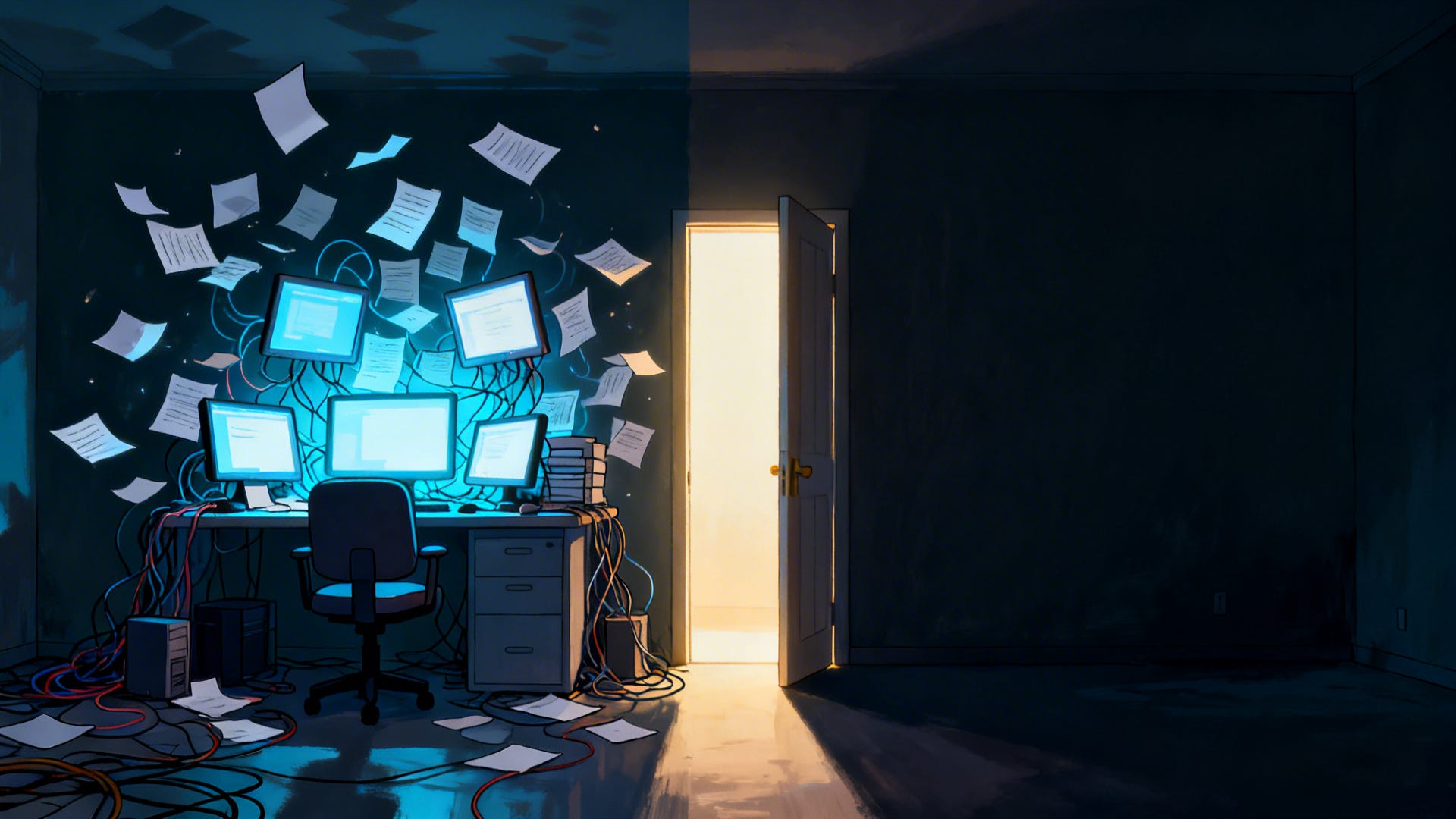
Work does not end when the day ends.
It follows you home.
In your thoughts.
In your tone.
In your energy.
You sit down, but your mind is still in the office.
You talk to people, but your attention is somewhere else.
You try to relax, but something feels tight inside you.
This is how stress spreads.
Not because your life is too busy.
But because your mind never leaves where it was.
Stoicism offers a simple idea.
You cannot always control your workload.
But you can control where your attention lives.
And that changes everything.
The real problem is not work, it is carryover
Work stress is not just about tasks.
It is about unfinished loops.
Things you did not complete.
Things you are unsure about.
Things you replay in your head.
Your mind tries to solve them in the background.
So even when you are home, you are still working mentally.
This is why rest does not feel like rest.
Your body is in one place.
Your mind is in another.
The Stoic approach is not to eliminate work.
It is to close the loop.
The Stoic rule: finish the day, even if the work isn’t finished
Most people leave work without a clear ending.
They just stop.
And when there is no clear ending, the mind keeps going.
Stoics believed in intentional closure.
At the end of your workday, take a few minutes to do this:
Write down what you completed.
Write down what is still open.
Write down the first step for tomorrow.
This creates structure.
Your mind no longer needs to hold everything.
It trusts that the work is organized.
Clarity reduces mental carryover.
You are not your work
One of the biggest causes of stress is identification.
You tie your value to your performance.
If work goes well, you feel good.
If work goes badly, you feel unstable.
This makes it impossible to separate.
Stoicism teaches detachment.
Your work is something you do.
It is not who you are.
You can care about your work without becoming consumed by it.
When you separate identity from performance, stress loses intensity.
Because your worth is no longer on the line.
The transition matters more than you think
There is a missing step between work and personal life.
Most people go directly from one to the other.
From screen to couch.
From meetings to conversation.
There is no reset.
So the energy of work flows directly into your personal time.
You need a transition.
Something simple that signals to your mind:
“Work is over.”
It can be a walk.
A short drive in silence.
A shower.
Even ten minutes of sitting without input.
This is not wasted time.
It is a reset.
Without it, stress carries forward.
With it, you create separation.
The discipline of presence
Even when work is done, your mind may try to return to it.
This is where discipline matters.
Not discipline to work harder.
Discipline to be present.
When you are eating, just eat.
When you are talking, just listen.
When you are resting, just rest.
Each time your mind drifts back to work, bring it back gently.
Not with frustration.
With control.
Presence is a skill.
And like any skill, it improves with practice.
Stop solving tomorrow tonight
A common habit is thinking about tomorrow’s problems at night.
You plan.
You worry.
You simulate conversations.
You imagine outcomes.
This feels productive.
But it is not.
It keeps your nervous system active.
Stoics understood the importance of time boundaries.
Today has its work.
Tomorrow has its own.
When you try to solve tomorrow tonight, you lose both.
You lose your rest.
And you still face the problem later.
The discipline is simple.
When the day ends, thinking ends.
You have already prepared.
That is enough.
Protect your attention like a boundary
Your attention is not neutral.
Where it goes, your energy follows.
If you constantly return to work thoughts, you stay in work mode.
So treat attention like a boundary.
When work thoughts appear, you have a choice.
Engage with them.
Or let them pass.
Not every thought deserves your time.
Especially not after the day is done.
The Stoic advantage
Most people never fully leave work.
So they never fully recover.
They wake up already tired.
They carry stress into the next day.
They repeat the cycle.
But when you learn to separate, you gain an advantage.
You recover faster.
You think clearer.
You respond better.
You bring a calmer mind back to work.
And calm is powerful.
Final reflection
Work will always demand something from you.
But it should not take everything.
Your time at home is not a continuation of work.
It is recovery.
It is presence.
It is life outside of performance.
So end your day with intention.
Close the loops.
Create a transition.
Return to the present.
Because the real skill is not just working well.
It is knowing when to stop working.
This touched on some things I’ve been contemplating/reflecting on, thank you
This reads less like a stress issue and more like a boundary issue between systems.
Work doesn’t always end—it just loses its formal structure.
So the mind keeps processing unfinished inputs.
Without a clear transition, one system carries into the next.
Clarity—and recovery—start when the system actually closes.